Guest Blog: Forward Looking Ad Spending


Some interesting stats from this research brief by Jack Loechner -- it looks like ad spending will be going up in the next year, which is good news for marketers:

According to ZenithOptimedia's study, "Advertising Expenditure Forecasts," global ad spending will increase 4.9% this year and grow at an annual rate between 4.6% and 5.2% over the next three years. In the U.S., ad spending will increase by 2.2% this year, and will be up by a projected 2.4% next year. Ad growth will be led by Internet advertising, which is projected to increase 12.5% next year and up an average of 10.6% a year through 2016, according to the report....

In the U.S., the media categories seeing the highest ad spending growth this year include:

• Internet driven by online video and social media. (13.5%)
• Television driven by technology (7.4%)
• Outdoor, also technology driven (3.0%)

Categories with the largest declines this year are:
• Newspapers (down 10.0%)
• B2B magazines (down 6.0%)
• Radio (down 2.6%)

The importance of the internet to advertisers is understated by these figures, because as well as creating new opportunities in paid media, it has greatly expanded brands' abilities to talk to consumers via social media, both ‘owned' (on brands' own websites and microsites, YouTube channels, Twitter and Facebook accounts and so on) and ‘earned' (conversations consumers have on forums, blogs, etc). These activities can be extremely effective, and many advertisers have embraced them enthusiastically, but most of them will never be picked up in a survey of ad expenditure, says the report.


Guest Blog: The Impact of Smartphones on American Life

Presented by Arbitron Inc. and Jacobs Media, this study is extremely important to the development and evolution of marketing in the coming years.  Smartphones aren't just changing the rules -- they're switching the game.

Goin' Mobile:  The Impace of Smartphones on American Life
Presented by Arbitron Inc. and Jacobs Media

Mobile has emerged as the new mass distribution medium, with more than four billion mobile devices worldwide—topping televisions, radios, and personal computers.  This study is a result of Arbitron’s interest in assessing how consumers perceive and use smartphones and attendant technologies.

• The smartphone has blossomed into a piece of technology that transcends definition. Despite their origins as “phones,” smartphones have become an essential piece of technology for a growing
number of consumers.

• Smartphones have permeated all aspects of American life. They have a significant impact on productivity, personal and professional accessibility and human engagement and interactivity.  Smartphones are redefining careers, the family unit and social intercourse.

• There were very few differences in the overall use of and attitude toward smartphones based on age, gender, geography or ethnicity. The key distinctions appear to be based more on 1) the type of device owned and 2) the specific job or lifestyle of the respondent.

• There do appear to be clear differences in the impact and use of a smartphone based on the type of phone that’s used. BlackBerry® owners tended to concentrate their usage on talking, texting and e-mailing. On the other hand, iPhone® and Android™ owners treated their smartphones in a customized, chameleon-like way. They were more able to configure these devices by accessing apps that fit their needs and desires, whether for social, business, personal or recreational needs.

• Smartphones have moved from the “next big thing” to the “most essential thing.” While typically regarded as “cool” or “fun,” these devices have become a part of most consumers’ personal communications equipment, and their utility and features are assumed. Most consumers believe that smartphones have nearly unlimited uses.

• Smartphones are rewriting the rules of social interplay, often breaking down barriers of what is considered to be acceptable public behavior. There are numerous complaints about rude drivers using mobile devices, as well as disdain for people sharing their most intimate details while talking on the phone in public. A devout church-goer felt compelled to text message while in church and even rationalized doing so in her interview. A student used her smartphone while in class and devised various ways of hiding its use. Whether it is acceptable to use these devices in certain situations or not, respondents often find ways to conceal or justify their use. While several respondents acknowledged that using mobile devices in certain situations is “wrong,” the need to be in touch can overwhelm these social norms.

• Apps are a key to the popularity and ubiquity of smartphones. We observed respondents who used apps to manage dietary needs or financial affairs and entertain their children while in the car or while the child was undergoing medical treatment.

• Smartphones have become completely invasive in the lives of most respondents. It is the one piece of technology that is with them during nearly all of their waking hours and is always “on.”


• Constant accessibility translates to greater efficiency and more comfort, but also increased stress. Many reported that having a smartphone for business has made them more productive because they could now multitask with ease. On the other hand, this study contains stories about how clients and bosses now expect a greater degree of responsiveness in the form of returned e-mail and/or text messages (something that we found to now be acceptable in business) on an immediate basis.

• Smartphone apps have been a “game changer” in the workplace. Many respondents share a strong conviction that these devices enhance their productivity and the quality of their business endeavors.

• Smartphone use while driving is universally thought to be dangerous, yet the activity continues. There is an obvious disconnect between rational thought (“I know I shouldn’t text while driving”), local laws (“I can get a ticket and a fine”) and the emotional, even addictive, need to stay connected. The lure of accessibility, speed and constant connectivity is simply too powerful for many, so they continue to engage in this activity despite the consequences.

• Smartphones may be altering the use of other devices. Most respondents increasingly use their smartphones for an increased array of functions and, as a result, there appears to be a drop-off in the use of other devices. Laptop and desktop computers, GPS units, cameras and camcorders and car radios seem to be used less frequently among smartphone owners.

• Smartphones make it easier to use social media tools like Facebook® and Twitter. While most respondents were utilizing these networking sites before owning a smartphone, their activity has accelerated with the ability to post, update and tweet while on the go.

• Smartphone media usage is increasing, but is still in the formative stages for many respondents. The entertainment application that was most ubiquitous was Internet radio station Pandora®. While many utilized this service on their desktops and laptops, the ability to access Pandora on their smartphone was a game-changer. Along with the Facebook application, Pandora was the most frequently used application.

• The smartphone is the ultimate time-filler and time-killer. While in line at the grocery store, waiting in a doctor’s office, eating, waiting at a stop light, needing a break from work and even while spending time in a restroom, the smartphone has emerged as the “go to” device.

• Finally, smartphones are addictive. While most admit it, there is a strong sense throughout these interviews that smartphones aren’t just about utility and recreation. There was often a compulsive quality about their omnipresence that many respondents were aware of.

Moving forward, expected improvements in technical connectivity, data storage and capacity and application development will accelerate everything we observed in this study.  We expect that consumers will become more addicted to their smartphones and, as prices for handsets and data plans moderate and access to more consumers improves, larger and larger segments of the population will experience what we observed in Goin’ Mobile.

The Times, They Are A' Changin': New Marketing Budgets

A really great article from Research Brief shows interesting trends for marketing budgets planned for 2011.  It's looking good for marketing next year -- at least half of businesses polled plan to increase their advertising budgets.  For the second year in a row, email marketing and social media marketing are expected to be the top targets for increased spending.  Here are the highlights from Strongmail's late November survey:

• 93% of businesses plan to increase or maintain marketing spend in 2010
• 41% of business cite lack of resources/staff as primary email marketing challenge in 2011; 41% data integration; 36% email deliverability
• 52% of businesses cite increasing subscriber engagement as top 2011 email marketing initiative; 49% improving segmentation/targeting; 43% integrating email and social media
• 65% of businesses plan to increase marketing budget for email; 57% social media; 41% search
• 71% of businesses plan to integrate email and social media in 2010

These numbers are very encouraging, indicating that email and social media marketing are still king in the marketing arena.  Another interesting stat claims respondents name lack of resources or staff to be the biggest marketing challenge in 2011 -- this opens up the job market for talented direct marketing individuals.

Strong goals for 2011 seem to be increasing subscriber engagement, improving segmentation and targeting, and integrating social media and email.  Social media may be the new kid on the block, but it's here to stay -- and interestingly enough, it's not knocking email marketing off its throne, either.  Business leaders know the two will have to play well together in 2011 for fully effective marketing.

You can read the survey and accompanying article in their entirety here on Mediapost.

Check In Before You Check Out: Social Media Meets Black Friday

With the social media explosion of the past year, everyone's getting in on the Black Friday action.  #BlackFriday has been a trending topic on Twitter for about a week, and scores of people are asking around the social media grapevine which retail outlets have what deals for the famed day of savings.

Gowalla, Facebook Places, and other social media giants have artfully begun their marketing for the shopping season.  Partnering with businesses like American Eagle and Radio Shack, they advertise extra savings just for checking in while you shop.  Target is a retailer that (wisely) invested in promoted tweets for Black Friday, guaranteeing their name stays atop the competition in your Twitter feed.

What do you think?  Is this all just hype, or are you excited by the idea of savings just for hitting a button on your smartphone?

Check out a great article about social media and Black Friday at Mashable, plus a list of participating businesses and their offered deals.

REJECTED: How Google Places Gets Aggressive

In June of 2010, Google Places amped up its algorithm by introducing a much more aggressive listing level spam review process.  What does this mean, exactly?  Well, as it often does in the world of SEO, it means the rules have changed again.  While your Google Places listing may have once been at the top, it can be buried by just tweaking your post a little -- or sometimes, for seemingly no reason at all.

This includes certain touchy rules such as not using the word "google" in a Places entry, allowing only up to 3 capital letters together (such as LLC or LTD), and various sexual words being banned from all listings.

In other words, Google Places means business.

If you'd like to read on and see what else these aggressive new changes entail and how to properly utilize them, see the original article here.

Twitter VS Facebook: Who's Winning the Click-Through Contest?

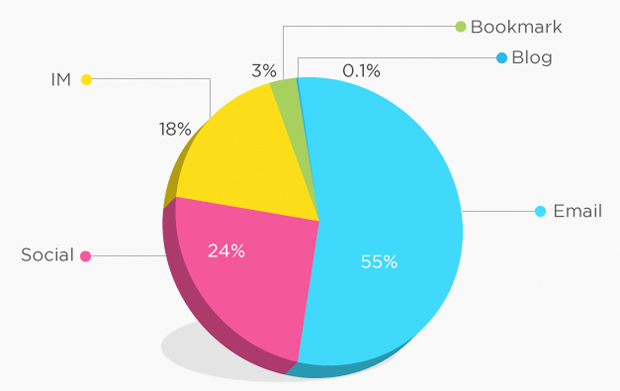
According to this article from Fast Company, Internet sharing trends have shifted dramatically.  While email still remains king with 55% of referrals, social networking sites saw a 10% jump.  But out of that arena, who's winning?  And how reliable is the source?

Simply put, Facebook is overwhelmingly the favorite for social network of choice with 78% of the market share.  Twitter only accounts for 5%.  Yet, the stats appear to lean towards Twitter rather than Facebook -- links shared through Facebook have a click-through rate of 287%, while Twitter boasts an astounding click-through rate of 1904%.

But what does this mean?

If the click-through rate is so high on Twitter, but it's not the social network of choice, how many clicks are really valuable?  And what about spambots or spyders checking these links -- does that have an effect on the rates?  And some savvy commenters argue that yes, the Twitter click-through rates will be inherently higher because that's all Twitter is.  Facebook has more content than just links, therefore the rates are lower.

What do you think?  Is there a simple answer for these statistics, or are the waters too muddied with other complications?

You can read the whole article and see the in-depth stats here.

Oops: New Gap Logo A Design Disaster

Due to steadily declining sales, clothing store The Gap decided to rebrand.  Put some new life in its veins.  Well... let's just say, they missed the mark.

The world has had all week to chew on the new logo since its release on Monday, and so far, most have spit it back out.  No one is quite sure what the new logo is trying to accomplish -- you can't exactly praise its simplicity, since the tried-and-true old version was a sparkling example of clean lines and space.  The square means... something, but what that is remains unclear.  The stark use of Helvetica is drawing many comparisons to a competitor's brand, American Apparel.

After their new branding efforts failed to capture the hearts of millions, Gap has switched tactics -- and is now launching a crowd-sourcing effort.  Meaning?  "Design our logo for us, if you hate the new one so much!"

Last resort, or genius viral marketing?  It could be that this whole fiasco was actually planned from the beginning, designed to generate buzz and then reap the benefits of a practically free new logo.  I'll admit one thing -- it's the first time I've even thought about Gap in years, much less had a conversation about them.

Read the whole story here, as well as an apology explanation from Gap's president Marka Hansen.
Follow us on Twitter! Follow us on Twitter!
All the news that's fit to tweet.
Become a Facebook fan! Become a Facebook fan!
Making friends and doing business.